
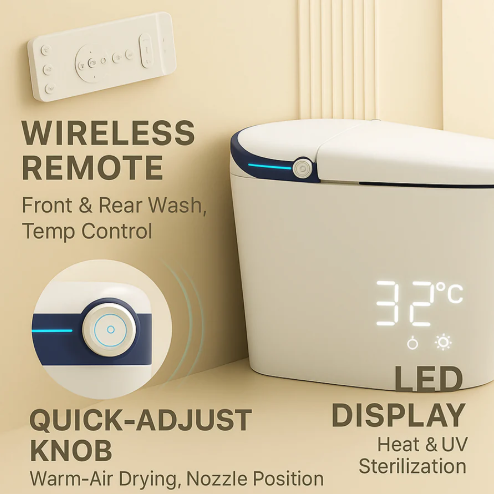
In recent years, bathrooms have become more technologically advanced, and smart toilets have emerged as one of the most innovative additions to modern homes. A smart toilet is a high-tech toilet designed to offer enhanced comfort, hygiene, and convenience beyond the capabilities of a traditional toilet. Equipped with advanced features such as bidets, heated seats, automatic flushing, and self-cleaning functions, smart toilets are redefining the way people experience bathroom use. This article provides an in-depth look at smart toilets, their benefits, features, and key considerations when choosing one.
What is a Smart Toilet?
A smart toilet is a toilet integrated with technology to provide features that improve comfort, hygiene, and usability. Unlike standard toilets, smart toilets often include built-in bidets, temperature-controlled seats, automated cleaning systems, and sensor-operated lids. Some models also incorporate deodorizing functions, night lights, and even Bluetooth speakers. Smart toilets are available in various designs, including one-piece or two-piece toilets, wall-mounted units, and Japanese-style washlets, offering both modern aesthetics and functionality.
Key Features of Smart Toilets
The appeal of smart toilets lies in their innovative features, which make the bathroom experience more convenient and hygienic. Some of the most common features include:
- Heated Seats
A heated seat is a standard feature in many smart toilets. It provides comfort during cold seasons and allows users to adjust the seat temperature to their preference. Some high-end models even offer customizable heating schedules. - Integrated Bidet Functions
Bidet functions use a gentle stream of water to clean after using the toilet. Most smart toilets allow customization of water pressure, temperature, and nozzle position for a personalized cleaning experience. This feature is more hygienic than using toilet paper alone. - Automatic Lid Operation
Many smart toilets have motion sensors that detect when someone approaches and automatically open or close the lid. This hands-free feature minimizes contact with potentially germ-laden surfaces and adds convenience. - Self-Cleaning Systems
High-end smart toilets often feature self-cleaning mechanisms for both the bowl and bidet nozzle. Some models use UV light or electrolyzed water to sanitize surfaces, reducing the need for manual cleaning and promoting better hygiene. - Deodorization
Integrated deodorizing systems remove unpleasant odors from the bathroom. These systems often use activated charcoal filters or ionization to maintain a fresh environment. - Adjustable Water Temperature
Smart toilets often allow users to set the bidet water to a preferred temperature, providing comfort during use. This feature is particularly useful in colder climates or for individuals with sensitive skin. - Night Lights and Ambient Lighting
Built-in night lights make nighttime bathroom visits easier and safer without turning on harsh overhead lighting. Some smart toilets include ambient lighting that enhances the aesthetic appeal of the bathroom. - Remote or App Control
Many models offer wireless remote controls or smartphone app integration to adjust settings such as seat temperature, bidet pressure, and flushing. Some toilets even allow users to save personalized settings for multiple household members. - Eco-Friendly Features
Smart toilets often include water-saving technologies, such as dual-flush systems or sensors that adjust water usage based on the type of waste. This not only reduces water bills but also supports environmentally sustainable living.
Benefits of Smart Toilets
Smart toilets offer several advantages that make them attractive to modern homeowners:
- Enhanced Hygiene
With features like bidets, self-cleaning nozzles, and touch-free operation, smart toilets promote a higher level of personal hygiene compared to conventional toilets. - Comfort and Luxury
Heated seats, adjustable water temperature, and customizable settings offer a spa-like experience at home, making bathroom use more comfortable. - Convenience
Hands-free operation, night lights, and remote controls make smart toilets convenient, especially for families with children, elderly members, or individuals with mobility challenges. - Water and Energy Efficiency
Many smart toilets are designed to conserve water and energy. Dual-flush and sensor-activated models help reduce water consumption, making them an environmentally friendly choice. - Aesthetic Appeal
Smart toilets often have sleek, modern designs that enhance the look of the bathroom. They can act as a statement piece, combining functionality with style.
Considerations When Choosing a Smart Toilet
Before purchasing a smart toilet, consider the following:
- Budget: Smart toilets are more expensive than traditional toilets. Prices vary depending on features and brand.
- Installation: Some models require professional installation, especially those needing electrical or plumbing adjustments.
- Space: Measure your bathroom to ensure the toilet fits comfortably. Wall-mounted or compact designs may be preferable for smaller spaces.
- Maintenance: While many toilets offer self-cleaning functions, periodic maintenance and filter replacements may be required.
- Features Needed: Prioritize the features most important to you, whether it’s bidet functionality, heated seats, or remote control operation.
Final Thoughts
Smart toilets are an advanced bathroom solution that combines hygiene, comfort, and technology. From heated seats and bidet functions to self-cleaning systems and water-saving features, these toilets offer a modern, luxurious experience for homeowners. While they may involve a higher initial investment, the long-term benefits of convenience, hygiene, and energy efficiency make smart toilets a worthwhile addition to contemporary homes.